· archived
Solergie: solar nano-grids in Togo, from SMS to NB-IoT
CTO of a solar-leasing company whose stack turned out to be 80% the same as the cattle-tracking platform I was already running.
- Embedded C
- Quantum Leaps QP
- NB-IoT
- GSM/SMS telemetry
- Energy metering
- PostgreSQL
- Pay-as-you-go billing
In this story: What it does · How it works · Lessons learned · How it ended · Reference

What it does
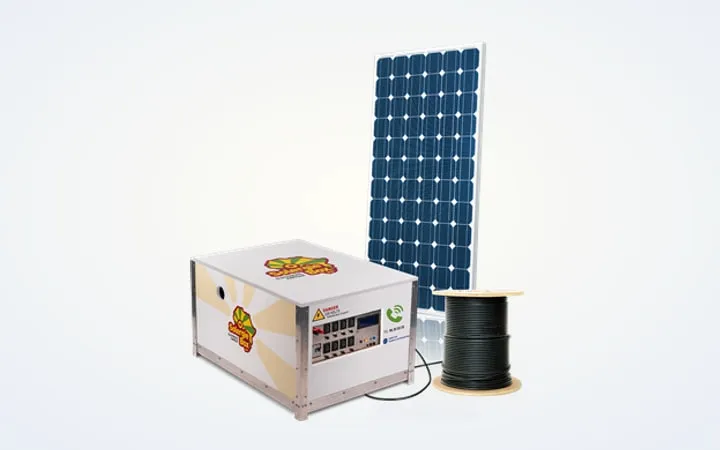
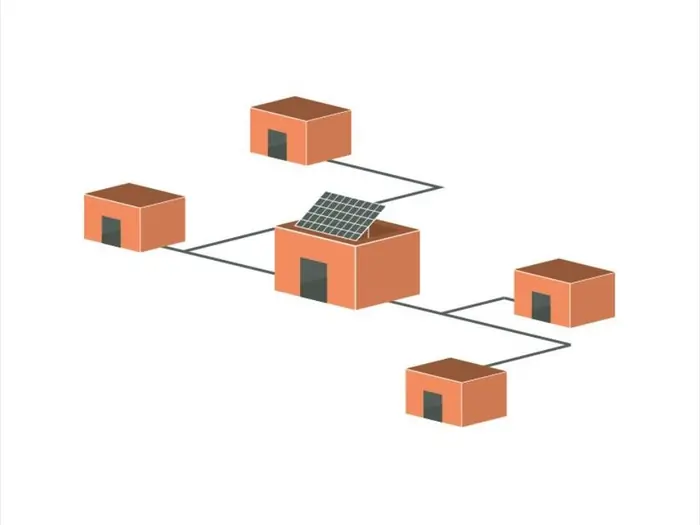
A SolergieBox is a small solar power station for a village with no grid connection. Solar panels and batteries feed up to eight households or small businesses nearby, each with its own meter. It delivers the same power as a wall socket, so a customer plugs in an ordinary fridge or sewing machine rather than a special solar appliance. That is what turns electricity from a household cost into a way to earn a living.
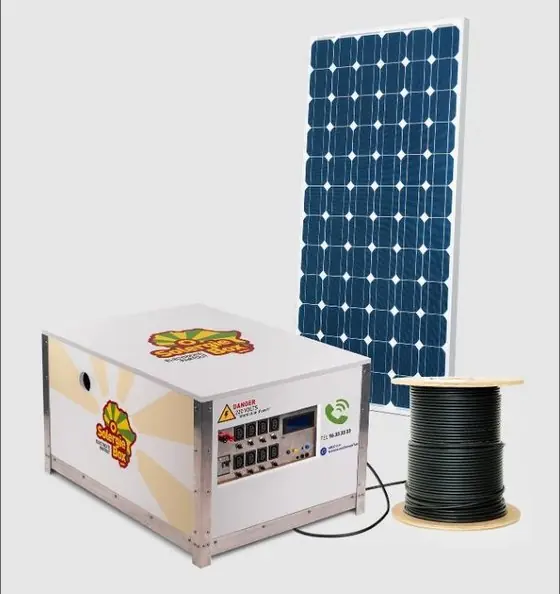
The commercial model is consume-to-own. Customers don’t buy the system; they buy electricity, by mobile payment, and what they pay for that electricity serves as the lease payment on the box. At the end of the lease, the box is theirs. The boxes are assembled in Lomé rather than imported.
How it works
The interesting constraint is that none of this is reachable. There is no site visit, no engineer nearby, and often no data connection, so the box reports over SMS on the networks of the Togolese operators Togocom and Moov. Once a day it sends its own state (battery, inverter, per-meter consumption) to the platform. When a customer’s credit runs low the platform sends an SMS back; if nothing is paid, that customer’s meter switches itself off while the other seven keep running. Metering, billing and disconnection all have to survive the network being absent for days.
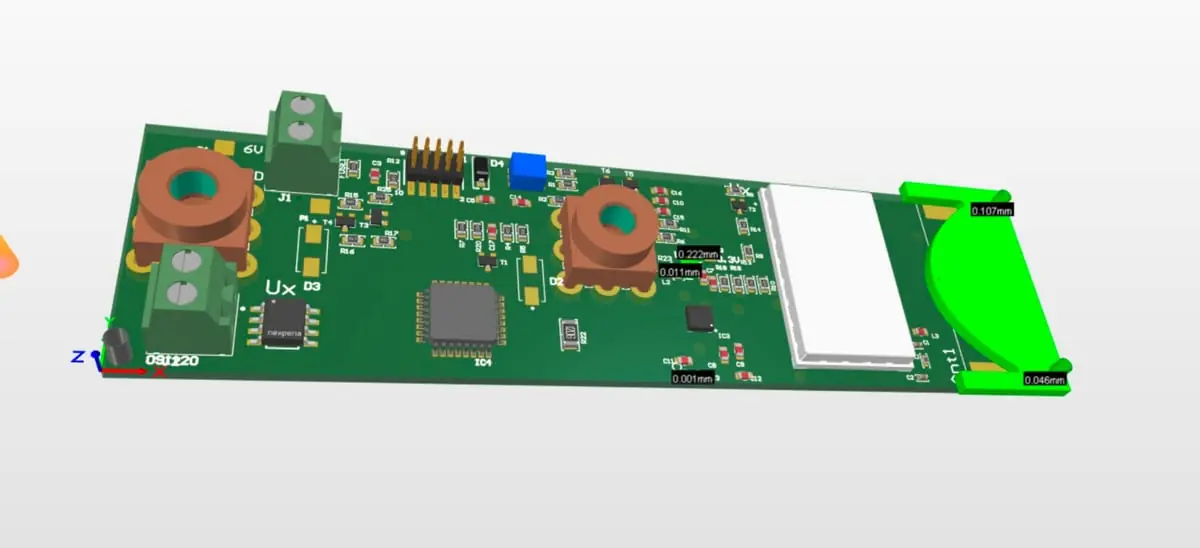
That SMS link was outdated. It carries very little, costs money per message, and the operators are moving their networks on. The goal of my work at Solergie was a new communication module that replaces SMS with NB-IoT: a cellular standard built for low-power devices that send small amounts of data, which is exactly what a box in a village does.
I met Solergie’s founder, Bert Bernolet, through a contest I organised for JCI Brugge. He won it: the Jonge Brugse Beer, an award for an outstanding entrepreneurial story. A couple of years later we ended up in a pub, swapping stories about what we ran into in Africa.
It quickly turned out that the story I was writing with Herd-itt was complementary to his. We both had a product with connectivity problems in Africa. The products were different, but the technology was very similar: a microcontroller, telemetry over whatever network happens to exist, and a backend that has to tolerate long silences. So the new NB-IoT communication module for Solergie was built on the hardware of the Herd-itt cattle trackers.
Bert, and later Marianne Criel, had gathered a team of employees and volunteers who were very loyal to the cause of bringing electricity to rural West Africa. They came with very different levels of experience in development. Joining the R&D effort meant, for me, finding a way to translate the product’s requirements into software the team could actually work with.
One of the volunteers was a former R&D manager of a large Belgian corporation: a very intelligent and capable person, who struggled to turn his functional analysis into an implementation. We decided to integrate the Quantum Leaps QP state machine framework. With it, he wrote extensive and difficult firmware himself, as state machines he could draw and reason about, while I was only responsible for getting the integration done.
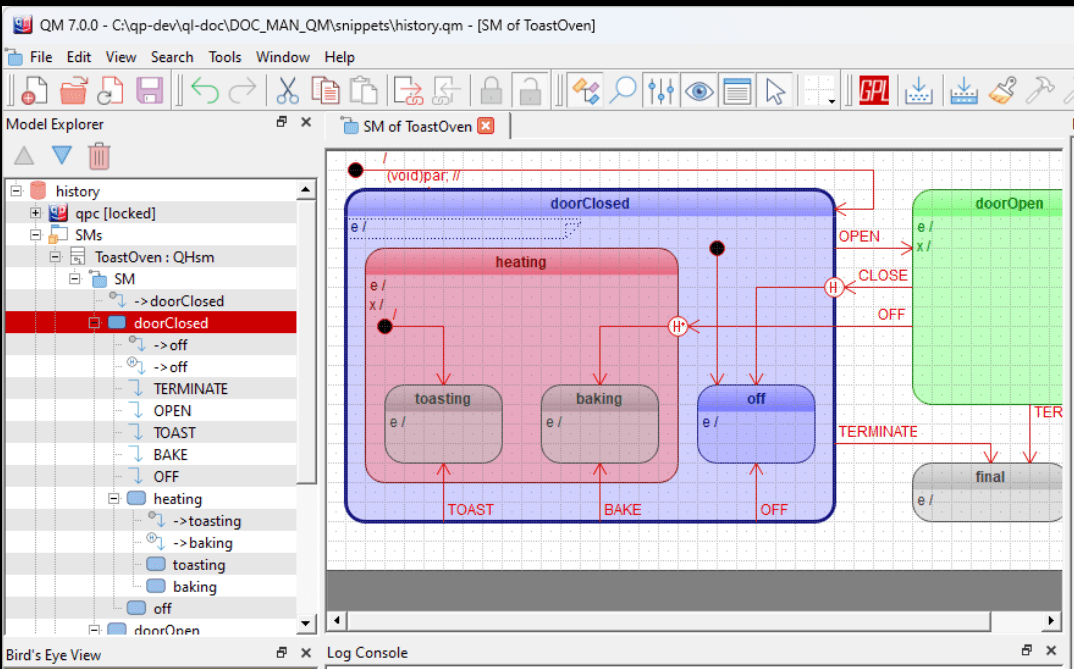
The plan was to take the same approach for the backend infrastructure, so the platform could talk to the boxes over NB-IoT.
Lessons learned
Focus
It is hard to keep your focus on your main project. The collaboration brought scale: more R&D capacity and more manufacturing capability. But my main focus remained selling tracking systems for cattle. Solergie had its own crew to finish the details of its product, and that division is what kept both projects moving.
Convincing and trust
To me it was clear from minute one. On the technology axis, a cattle tracker and a communication module for energy monitoring are much the same thing. Only the functionality of the firmware sets them apart. It still took me quite a few months to get that across and to earn the trust of the people working at Solergie. It all comes back to selling your idea and communicating it. I ended up being Solergie’s CTO as well.
Influencing without authority
For most of my time at Solergie I had no authority over anyone. I started as an outsider with a side project, and even as CTO most of the people I coordinated were volunteers. You cannot give a volunteer an order: they give their time because they believe in the cause, and they can take it back the next evening.
So influence had to come from somewhere else. From being useful first: solving problems the team actually had, before asking anything of them. From making the right way the easy way: the QP framework let the volunteers build firmware in a form they could reason about, so following the architecture was simpler than working around it. And from giving the credit away: the firmware was theirs, the integration was mine. For a project manager coordinating people outside their line, that is the whole toolkit: be useful, make it easy, and let others own the result.
Stakeholder management
Working for two companies at once builds conflicting interests in. Herd-itt and Solergie shared the same hardware and technology, but each had its own priorities and its own deadlines. I kept the line clear: the shared technology served both, Herd-itt stayed my main focus, and Solergie’s own crew owned the finishing of its product. Saying that openly, instead of promising both sides everything, is what made the arrangement work.
Inside Solergie, the stakeholders were employees and volunteers with very different backgrounds. The hardest case was the volunteer and former R&D manager: senior, highly capable, and stuck between his functional analysis and working firmware. Telling an experienced person his approach does not work rarely helps. Giving him a tool that let him express his own design, QP state machines, did. He wrote the firmware; I kept to the integration. Waiting for the firmware to grow out of the functional analysis by itself would have cost months. Changing the tool was a decision we could take straight away, and it unblocked him.
Let the data be your site visit
Nobody drives out to a box in a Togolese village to see how it is doing. The once-a-day report is the only view you get: battery, inverter and consumption per meter. Everything runs on it, down to the credit warning and switching off a meter that is not paid. That is also why the SMS link had to go. A channel that carries so little limits what you can see, and what you cannot see, you cannot manage.
Dedication
Much of the group were volunteers dedicated to the cause, and I learned a lot from Solergie’s management about keeping people motivated. For the volunteers it was definitely not about money. They believed, intrinsically, that they made a difference in the world by giving their time to Solergie. The storytelling, the parties, the evenings in the pub: they all make sense once you see them as a way of convincing people.
Raising the money
At Herd-itt we raised money in a business angel investment round, based on facts and a strong business plan. Solergie did the opposite: it raised money from the moment it could prove it could be self-sufficient. We raised money on hard numbers and facts. They raised money on belief and the power to convince.
Staying when it gets hard
Solergie Belgium went bankrupt before the backend work could be done. That ended the plan, not the commitment. The Togolese branch still had customers on the boxes and a production line in Lomé, so for many years afterwards I kept supporting it to keep it afloat and its production running. A project can fail without you walking away from the people who depend on it.
How it ended
Sadly, Solergie Belgium went bankrupt before the backend work could be done. For many years afterwards I supported Solergie’s Togolese branch to keep it afloat and its production running.
Reference
Written on LinkedIn by Marianne Criel, April 2026. In short, translated from Dutch:
Peter has very broad IT expertise and combines it with a pronounced hands-on mentality. When a problem comes up, he does everything he can to reach a solution — and you see that in the results he delivers. […] He knows how to steer people and bring teams along.
Marianne Criel, CEO, Solergie (translated from Dutch)
The full recommendation, as she wrote it:
Ik heb het genoegen gehad om met Peter samen te werken als freelancer, en hij heeft een bijzonder sterke indruk nagelaten. Peter beschikt over een zeer brede IT-expertise en combineert dat met een uitgesproken hands-on mentaliteit. Wanneer er zich een probleem stelt, zet hij alles op alles om tot een oplossing te komen — en dat merk je in de resultaten die hij neerzet. Peter heeft een directe communicatiestijl. Die helderheid zorgt ervoor dat er snel geschakeld wordt en vooruitgang wordt geboekt. Daarnaast weet hij mensen goed aan te sturen en teams mee te krijgen. Hij draait er zijn hand niet voor om om zich nieuwe technologieën of vaardigheden eigen te maken wanneer dat nodig is. Kortom, Peter is een echte meerwaarde voor elk team dat gericht is op resultaat en vooruitgang.
Marianne Criel, CEO, Solergie